
Star Wars, Christianity, and the Wise Mind: How to Balance Your Thinking and Emotions
John Lakvold
“A long time ago in a galaxy far, far away” are the iconic words of every Star Wars movie. These movies have entertained audiences for the past fifty years. Several generations remember Star Wars movie characters, such as Darth Vader, Luke Skywalker, R2D2, C-3PO, Yoda, Han Solo, Princess Leia, Lando Calrissian, and Obi-Wan Kenobi. Some individuals have turned Jediism into a religion by practicing the Force.
Elements of the Star Wars franchise have biblical and psychological principles. The Force and Dark Side represent good and evil. The lives of Darth Vader, C-3PO, and Yoda serve as metaphors for developing a healthy balance of thoughts and emotions.
God created both thoughts and feelings. Both serve a valuable purpose. Thoughts allow us to focus and give us direction. Emotions allow us to feel a complete spectrum of feelings. Because evil entered the world, thoughts and emotions can be primitive, fleshly, and evil. Focusing on God helps our thoughts and emotions become well-reasoned, holy, and righteous. Nevertheless, we cannot believe everything we think and feel.
God also created logical and emotional reasoning. Logic allows us to reason and think through problems. Emotions allow us to feel those decisions intensely. Nothing is wrong with thinking logically or emotionally. However, going to extremes leads to disastrous results.
Balancing logical and emotional reasoning is one of the key principles behind Dialectical Behavioral Therapy (Linehan, 2014). Linehan calls this concept: the Wise Mind. The wise mind includes information from emotions and logic to make well-balanced decisions.
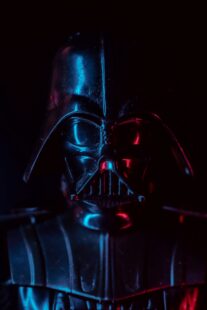
Darth Vader
Anakin Skywalker was a young boy found by Obi-Wan Kenobi and Qui-Gon Jinn. Obi-Wan decided to train Anakin after Qui-Gon was killed. Anakin became known as the “Hero with No Fear” as he fought against enemies as a young Jedi. However, Anakin had hidden fears.
 Even though Jedis were prohibited from having romantic relationships. Anakin secretly fell in love and married Padme. He and Padme conceived twins secretly. Anakin loved his wife very much. He began to have nightmares about losing his wife. Anakin struggled with these nightmares.
Although Anakin tried to hide his emotions of fear, he could not hide his emotions from his master or his wife. Obi-Wan warned Anakin not to be controlled by his emotions. However, Anakin allowed his emotions to consume him. He decided to turn to Darth Sidious to relieve himself of his fears. Darth Sidious had a simple request for protection: kill all the younglings (children who were training to be eventual Jedi Knights).
Anakin accepted the bargain and betrayed his fellow Jedi Knights to protect his wife. After killing all the younglings, his wife and his master looked for Anakin to redeem him. Instead of accepting their invitation, Anakin was filled with rage and arrogance and accused his wife of infidelity with his master. In his rage, he hastened his pregnant wife’s death and began to attack his master. Obi-Wan reluctantly almost killed Anakin.
To add insult to his already severe injuries, Darth Sidious came to collect Anakin’s severely burnt body and created a suit of armor for him. This suit of armor kept Anakin alive, but in constant pain, both physically and emotionally. Anakin was reminded of the bargain he had struck with Darth Sidious, and he became Darth Vader.
Darth Sidious forced Darth Vader to do his bidding to destroy the rest of the Jedi Order and rule the galaxy. Failure to carry out Darth Sidious’ plans meant death, and Darth Vader searched for rebels who dared to challenge Darth Sidious.
Even though Anakin had hastened his wife’s death, she gave birth to two children, raised separately. Their son grew up to become a Jedi Knight and challenged his own father twice. During his second confrontation with his father, Luke Skywalker appealed to his father’s goodness to break Darth Sidious’ hold on him. Luke’s appeal was successful, and Anakin died honorably.
Several lessons can be drawn from the fall of Anakin Skywalker. First, everyone has fears. It is natural to be afraid. Fear is a natural emotion. Fears make individuals fight them, flee from them, or freeze because of them. The most effective strategy to handle fears is to face them. Anakin could have chosen to face his fears and continue to be a hero.
Second, Anakin allowed emotional reasoning to dominate him. Cognitive therapists would argue that emotional reasoning is faulty because our emotions are not always accurate. In other words, our emotions blurred reality. Anakin’s distorted thinking created widespread destruction throughout the Empire and in his own family. His behavior led to Anakin’s imprisonment in a suit of armor, constantly tortured by inappropriate decision-making.
 Third, Darth Vader’s final act to destroy Darth Sidious was a story of redemption. Darth Vader’s story is similar to stories found in the Bible. In Judges 16, Samson fell in love with Delilah and gave away the secret to his strength. In a final act, Samson asked God to destroy the Philistines by pushing the pillars of the temple, crushing everyone inside the temple.
In Luke 15, Jesus told the parable of the Lost Son. The Lost Son squandered everything he had. When he came to his senses, he decided to return to his father. All three stories illustrate a return to one’s true self. It is never too late to do the right thing.
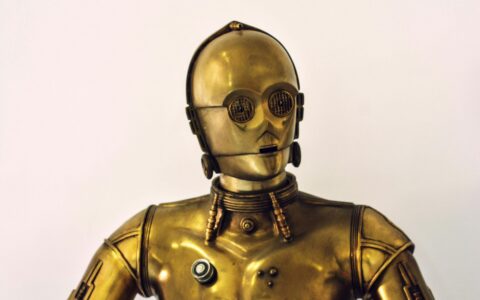
C-3PO
C-3PO was a humanoid robot created originally by Anakin Skywalker in the first Star Wars movie. He continued to be a character through the Star Wars franchise, serving various masters. Unlike Anakin Skywalker, C-3PO wanted to avoid dangerous situations and relied on logical reasoning and his vast knowledge of millions of languages.
C-3PO, as a robot, was incapable of having or expressing emotions. His role was to serve his master, like a butler who serves the master of the house. Anakin was his first master. Anakin used him as a playmate with whom to have adventures. Unfortunately, Anakin left C-3PO behind when he began training as a Jedi Knight.
Eventually, C-3PO became an aide to Senator Padme. While employed by Senator Padme, C-3PO reunited with Anakin Skywalker and witnessed the decimation of the Jedi Order, the fall of Anakin Skywalker, and the birth of the Skywalker twins. When Senator Padme died, another Senator Organa ordered a complete wipe of C-3PO to protect everyone.
C-3PO served his next master for nineteen years on a Rebel ship. After nineteen years, Darth Vader entered the ship looking for the plans for the Death Star, but C-3PO and R2D2 escaped in a pod to the planet Tatooine. Eventually, C-3PO and R2D2 were sold to the guardian of Luke Skywalker.
Luke’s guardian placed Luke in charge of the droids. Luke became the new master of the droids. The droids served Luke Skywalker in various capacities until Luke isolated himself. Luke attempted to train his nephew, but his nephew turned to the Dark Side and became a Sith apprentice.
C-3PO next worked for Luke’s biological sister, Princess Leia Organa, as an aide. Leia put him in charge of monitoring spy droids throughout the galaxy. He also served as a translator for the Rebellion, led by Leia.
 Several points can be drawn from the character of C-3PO. First, C-3PO was a robot that only thought logically. He attempted to avoid risk throughout the Star Wars saga. He often scolded his friend R2D2 for wandering off and finding trouble. C-3PO also frequently reminded Han Solo of the odds against him, which irritated Han.
Because C-3PO thought only logically, overreliance on logic caused him to conflict with the other characters in the movies. If C-3PO were in charge, there would be no Rebels or Rebellion, because C-3PO was risk-averse. Even if there were a Rebellion, its moves would be predictable and quickly defeated.
Second, being too logical squashes the spectrum of emotions humans experience. Being robotic robs humans of the experience of love and giving love to others. Being too analytical robs a person of joy. Relying solely on rationality prevents humans from being kind to one another.
Nothing is wrong with logical thinking. However, the Bible states that an individual can comprehend all the mysteries known to man and be omniscient, but if the individual lacks love, it means nothing (I Corinthians 13:2). God bless humans with emotions to feel everything.
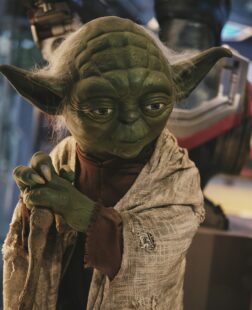
Yoda
Yoda was a Jedi Grand Master. He sat on the Jedi Council until it was destroyed by Darth Sidious, his army, and Anakin Skywalker. Yoda was leery from the beginning about Anakin Skywalker. He sensed that the fears within Anakin would turn him to the Dark Side one day.
In the earlier Star Wars movies, Yoda fought against the emergence of the Sith Lord, Darth Sidious. Yoda was the last line of defense between the Jedi and Darth Sidious. Despite fighting gallantly, Yoda was unable to defeat Darth Sidious. He escaped and went into exile.
After Darth Vader killed Obi-Wan Kenobi, Luke Skywalker came to the swampy planet of Dagobah to look for Yoda. After he found Yoda, Yoda began to train him to become a Jedi Knight. As Luke was training, he sensed that his friends were in danger. Yoda warned Luke not to go because he was relying on his emotions too much, but Luke ignored Yoda’s advice and left to rescue his friends.
Unbeknownst to Luke, Darth Vader was setting a trap for him. Darth Vader was going to freeze Luke and hand him over to Darth Sidious. Luke fought Darth Vader and lost his right hand in the fight. Luke returned to Dagobah to complete his training with Yoda. Growing old and feeble, Yoda died of old age.
Several lessons can be learned from the life of Yoda. First, Yoda combined logic and emotion to make decisions. It was known as the Force. He did not make foolish, rash decisions like Anakin. Yoda did not overanalyze situations like C-3PO. He used both in balance to decide a course of action and maintain self-control.
Unlike C-3PO, Christians do not rely solely on human philosophies or logic to shape our thinking (I Corinthians 1:20; II Corinthians 10:5; I Timothy 6:20). Unlike Anakin, Christians do not engage in emotionally driven thinking (I John 2:15-17).
Like Yoda, Christians practice self-restraint and discipline (I Corinthians 9:24; II Timothy 1:7; Hebrews 12:4-11; Galatians 6:23; II Peter 1:6). Rather than using the Force, Christians rely on God’s Word to rule their thoughts and emotions (Hebrews 4:12).
Next steps
Do you struggle with runaway emotions that are hard to tame? Are you accused by loved ones of being too stoic and having a lack of emotions? Do you rely too much on human philosophies and too little on God’s Word? Have you been caught up in the lust of the eyes, lust of the flesh, and the pride of life? We, at Spokane Christian Counseling, would like to assist you with these problems.
“Darth Vader”, Courtesy of Daniel Maquiling, Unsplash.com, CC0 License; “C-3PO”, Courtesy of Lyman Hansel Gerona, Unsplash.com, CC0 License; “Yoda”, Courtesy of Riku Lu, Unsplash.com, CC0 License